

Out here in the online space, links form fast between people and places. Still, when things go quiet – when systems stop – damage creeps in without warning. Losing just a small stretch of time live might bleed profits while weakening how others see your reliability. Problems once seen only at huge companies now knock on smaller doors every single day. That brief glitch? It could twist into consequences way beyond what seems possible.
When a system fails, silence follows if there’s no one to call. Larry Ellison once drew a sharp contrast: if an open-source database crashes, you may find yourself waiting with no vendor on the hook to rescue you. That idea resonates because it touches a real fear many teams have about support. Help means more than paperwork; it means another person steps in when failure hits. Going through collapse without aid? That choice ignores risk. Operations need reinforcement. Downtime carries weight too heavy to ignore by standing apart.
 Productivity drops hard, though it might slip under your radar at first. Tools crashing – ERP, CRM – bring work to a dead stop. People just wait around when they should be moving. Paychecks keep coming even while hands stay idle. Afterward comes the mess: tracing failures, patching up lost files, sitting through talks about how things fell apart. Out of nowhere, key engineers shift to fixing problems rather than creating. One small issue leads to another, then another – soon the hours pile up.
The Cost of One Minute
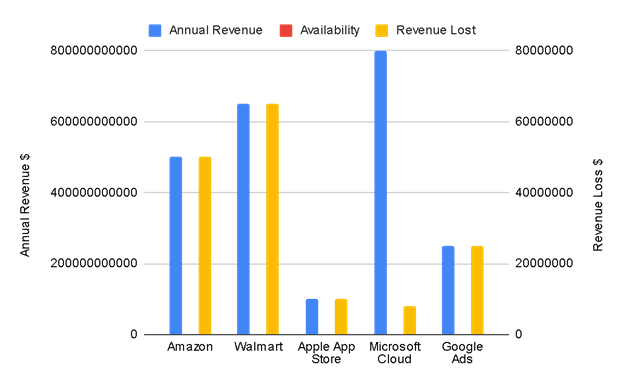
Most folks shout about the problem before they even think. Trouble begins ticking while others scramble to type anything at all. This total won’t show on any spreadsheet neatly filled out. Harm spreads sideways, backward, forward – no clean path. Hidden gaps appear slow, like shadows stretching past noon. Little jolts build without warning, each one feeding another quietly. Losing money hits hard when sales stop. Picture your website freezing up. Right then, every product sits untouched. A shop pulling in fifty grand daily? Four hours off could wipe out twenty thousand fast. On paper, it looks one way. But here’s the thing: what you see isn’t close to the whole picture – more sits out of view, like most of an iceberg underwater. It’s one thing to talk about losses in theory, but seeing the numbers side-by-side really puts the risk into perspective. Take a look at the impact of downtime for some of the big kids on the block.
Productivity drops hard, though it might slip under your radar at first. Tools crashing – ERP, CRM – bring work to a dead stop. People just wait around when they should be moving. Paychecks keep coming even while hands stay idle. Afterward comes the mess: tracing failures, patching up lost files, sitting through talks about how things fell apart. Out of nowhere, key engineers shift to fixing problems rather than creating. One small issue leads to another, then another – soon the hours pile up.
Lost Trust Means Damaged Reputation
Stopping things suddenly doesn’t bother most customers at all. This kind of issue often points deeper – like cracks beneath the surface showing your business isn’t holding up. Off they go to post online, where even brief delays begin to paint you as careless, especially if you’re small and claim to be quick and close-knit Sometimes walking away feels simpler once talks fall apart. Yet jumping ship might hide deeper issues – maybe their offerings truly stand out. Keeping people around usually takes far less effort than reeling them back in. Numbers show the gap clearly. Reconnecting with someone who left often demands five times the resources, sometimes even twenty-five.Architecting the Solution: Oracle RAC vs. Data Guard
For real risk reduction, basic backups fall short – try pairing them with systems that stay online even when parts fail. Start with Oracle, then soon enough RAC shows up – its twin brother Data Guard tags along too. One keeps things running when parts fail; the other copies everything somewhere safe just in case. These two pop up every time someone talks high availability for Oracle databases. Knowing how these tools function can make a difference, particularly when managing a small business. The aim here isn’t complicated – just maintain daily operations while shielding what’s essential.Oracle RAC Runs Multiple Systems Together for Steady Uptime
Start with Oracle RAC. That setup runs active-active – more than one server runs its own Oracle instance while all of them link to the same shared database at the same time. Instead of waiting turns, they operate together, tied into shared storage without stepping on each other’s tasks. Picture a grocery store where ten lanes take payments. When one worker leaves their shift early, the rest pick up without fuss. Nine still open means customers move through just fine. Most shoppers wouldn’t spot the difference at all. When it comes to tech, RAC scales cleanly node by node. If traffic jumps higher than expected, new nodes join the cluster smoothly while everything keeps running. For small businesses, RAC tackles hardware crashes head-on; should a server die or a motherboard stop working, the remaining nodes take over instantly – users never notice a thing. Peering under the hood, RAC runs on a shared-disk setup where multiple Oracle instances run on separate servers but all access the same database on shared storage. A fast internal network – the interconnect – makes this possible by linking them tightly. Using Cache Fusion, Oracle shifts data chunks straight from one server’s memory to another. Out of nowhere, it minimizes physical disk reads. When one machine wants info stored on another, speed jumps into play – data moves almost instantly Locks everywhere in the cluster get watched by one coordinated system. Because of that watcher, conflicting updates between separate machines are strongly controlled. The system works hard to prevent two identical changes from colliding at once. Accuracy holds firm when stock levels shift, and the design greatly reduces the risk of undetected corruption. The effect is a cluster that keeps data consistent even as nodes come and go. When one server crashes completely, others take over right away. Your money data stays safe no matter what.
Oracle Data Guard Keeps Data Safe
One server handles the workload while another stays ready just in case things go wrong. When hardware fails nearby, RAC keeps operations running locally. For bigger disruptions, Oracle Data Guard steps in to protect information across distances. Copies of the main database stay updated constantly at separate sites. These backups sit idle until needed, matching changes almost instantly. One shop has ten cashiers run by RAC. Across town, a matching location is managed by Data Guard. If flames hit the main facility – or blackouts spread across the area – a Data Guard Broker configuration with Fast-Start Failover can automatically shift operations to the backup site. A sudden loss of power nearby could trigger it just as fast as actual burning does. When conditions break down up front, the system reroutes itself behind the scenes. Outages that blanket regions get answered automatically by this switch. Fire damage or widespread electricity failure prompts an immediate relocation of duties. The secondary spot wakes up when disaster silences the primary one. When groups live far apart, disaster in one place does not wipe out everyone. When things go sideways, Fast-Start Failover kicks in without waiting. Small firms gain time because the system switches automatically. Downtime shrinks when recovery happens mid-fault. Data Guard handles shifts before users notice. Speed matters most during unseen hiccups. Recovery isn’t perfect – but it buys breathing room. Mistakes still happen – yet delays drop sharply. When the main database fails, the system notices right away. Instead of stopping, it moves all operations over to a backup machine without delay. Because the switch happens so fast, data remains protected and intact. Recovery takes place immediately – no waiting needed. When things go wrong, machines now step in so people do not have to rush around doing everything by hand. Each time someone saves a change, the main database writes down what happened. Because of this, redo logs move automatically to the secondary location. The system sends these records using Redo Transport Services. At the receiving end, those recorded actions get applied again. Redo Apply handles the replay process on the backup. So the mirror stays nearly the same as the live one. That is how Data Guard maintains consistency That standby site does more than wait around when Active Data Guard is enabled. You can open it in read-only mode and let it handle heavy reports and backup jobs. Read workloads move here instead of piling onto the main system, so the primary database stays focused on transactions. Work gets pulled away from the production server quietly. Speed at the primary location holds steady, especially when users need quick responses. Even as reports get pulled, every sale keeps moving at full speed. That setup stretches each machine’s worth, wrapping everything in solid protection.The MaxApex Way Combining Strength and Reach
Most small businesses struggle to afford the specialized skills needed when setting up RAC or Data Guard on their own. Expertise in database management becomes a barrier, along with high upfront costs. These hurdles tend to block access for companies without large budgets. Technical demands pile up quickly, making self-deployment unrealistic for many Here’s how MaxApex builds a smart link between needs and results. Using Oracle Cloud Infrastructure, performance stays strong while costs stay low. Instead of generic hosting, think tailored setup. Every detail fits purpose.- One server holds your data? Not here. MaxApex spreads it using OCI’s multi-AD setup – hardware stays separate, so does power supply. Outages hit one spot only. The rest keeps running, untouched
- When your company expands, the system keeps up – no pauses needed. With RAC built in, MaxApex supports small and midsize businesses adding power or space smoothly. Growth happens live, skipping old-style downtime traps tied to outdated setups
- Resting and moving data stays locked down through encryption when MaxApex uses OCI tools. This setup clears tough approval rules without strain, fitting tight security demands naturally